Return to main Vanishing B.C. page Return to home page
Page last updated December 10, 2025

The view of East Bay, Beaver Cove from the Telegraph Cove Road, 2003. I must go back there one day and do a better painting!
|
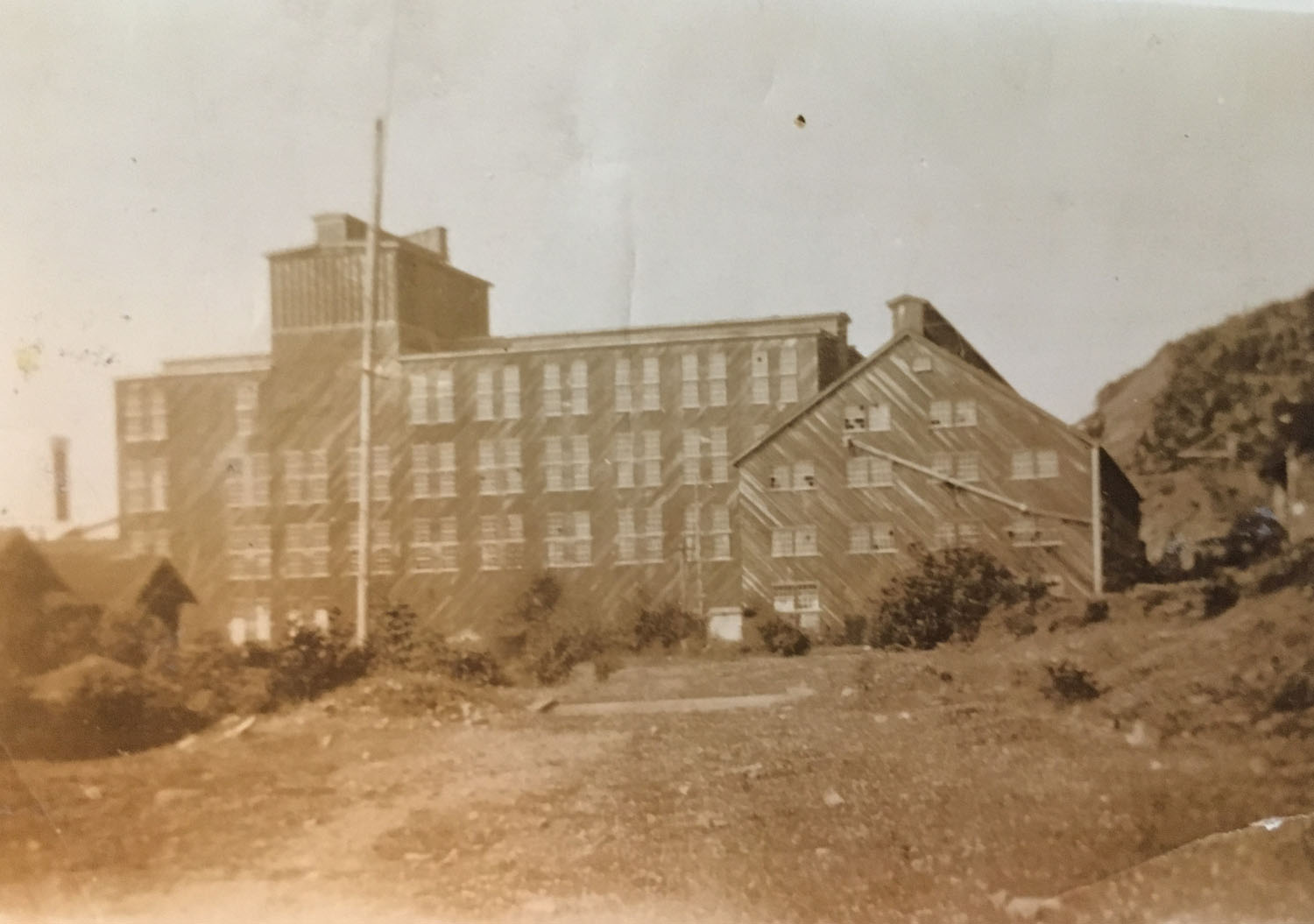
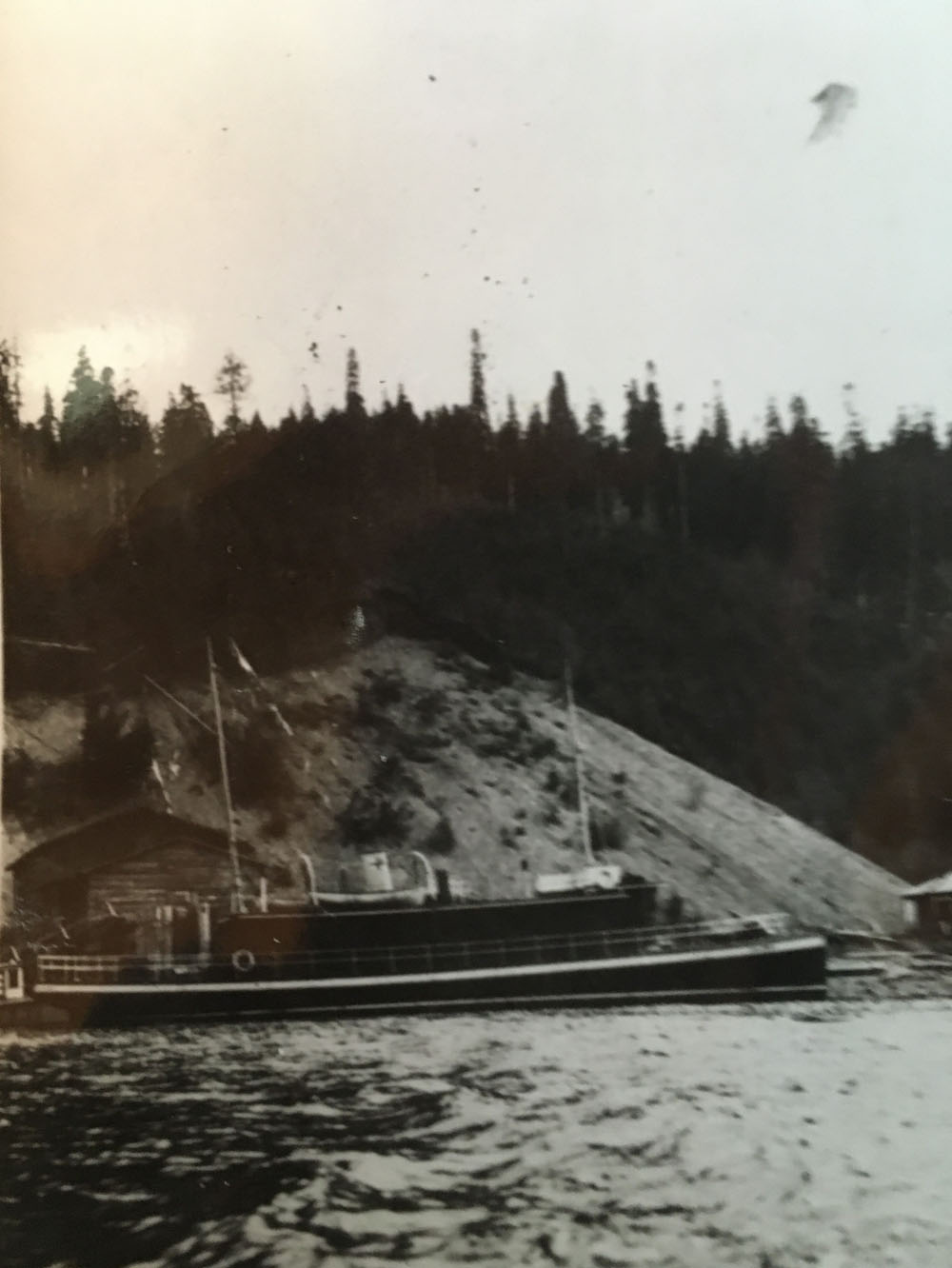
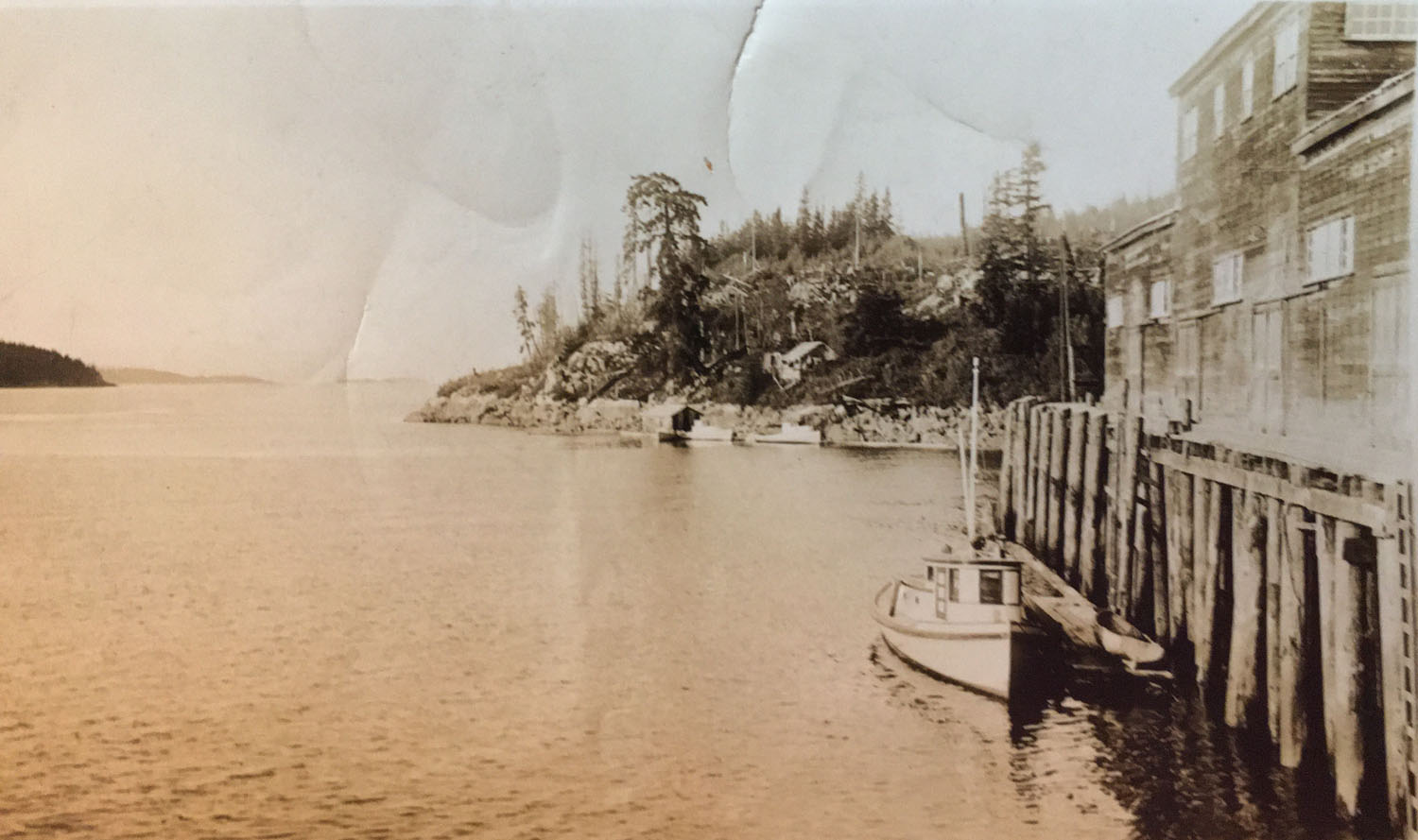
The collection of floathouses and cabins on stilts at Beaver Cove on Johnstone Strait is an authentic, rather grungy resource community, certainly compared with nearby Telegraph Cove, which has been restored into a very upscale tourist resort (with pay parking for drop-bys, even!) catering to fishermen and whale-watchers. In this era of corporate logging and prefabricated, manufactured homes, where paved roads extend into almost every nook and cranny of Vancouver Island, most logging and fishing communities have lost their historic look. The buildings here apparently date from the 1920s through the 1970s--built primarily of wood, as opposed to vinyl or aluminum, they have weathered into an aesthetically pleasing ensemble (especially when seen from a distance). The Beaver Cove Lumber and Pulp Company built the first settlement near here in 1917. An American investor named James White invested about a million dollars in wharves, a pulp mill, shingle mill and sawmill, and put in a railway to bring logs down from the hinterland. The community consisted of a hotel, bunkhouses and cookhouses for single men and detached houses for the foremen, a general store and a small, separate Chinatown. The pulp mill was poorly designed, however, and the company soon went broke and closed in 1920. Five years later, the lumber company Wood and English established a new community nearby at Englewood. During the Twenties and Thirties, Englewood and Beaver Cove operated as typical outports, looking to the long-established community at Alert Bay, and floating "department stores" such as the converted yacht Jolly Jumbo, for provisions. There was regular steamer service and a farm a mile away, owned by Capt. Corney, which supplied cream and milk. During the 1930s about 30 families lived in the area. Beaver Cove apparently hosted a monthly dance, using an Indian orchestra from Alert Bay, that attracted revellers from communities including Sointula and Telegraph Cove. (By the way, the cove is named for the legendary Hudson's Bay Company steam paddlewheeler Beaver.) Three years after its incorporation in 1938, Canadian Forest Products bought the property and in the early 1950s began construction on the railway that connects the Nimpkish Lake area with the coast. Crown Zellerbach, which had bought Beaver Cove from Canadian Forest Products in 1946, moved the settlement up the hill to Kokish and cleared the waterfront at the end of the rail line to create the flat log-sorting area visible today to anyone coming in by road.(Source: Insight Consultants. North Island Heritage Inventory and Evaluation. 1984). There is a good essay on railway logging at http://www.knowbc.com/iebc/book/R/raillog.ASP , and the Nimpkish line is significant due to Locomotive 113, a 135-ton monster that hauled logs as late as 1971, making it probably the last working logging locomotive in North America. Telegraph Cove was well-named, as it began its life in 1912 as the island terminus of the telegraph line, but expanded with a box-making plant and a small saltery. Until 1942, there was a Japanese community at Englewood, and one of the surviving Telegraph Cove cabins belonged to a Japanese fisherman named Ogawa. One of the men at Telegraph Cove, Charlie Nakamura, presciently left the coast shortly before the war was declared and reestablished himself near Salmon Arm, where he opened a tie mill; his contacts with the Nagatas and Konishis led them from Mayne Island to the Shuswap during the war (Source: interview with Fiko Konishi, 2002). ------------ From Dexine Wallbank, 2025: Here are some photos of Beaver Cove around 1929/30 and one of Engelwood at about the same time. My mother (along with her parents and siblings) lived in Beaver Cove for close to a decade, starting in 1929. Her father was a machinist at the Englewood sawmill.
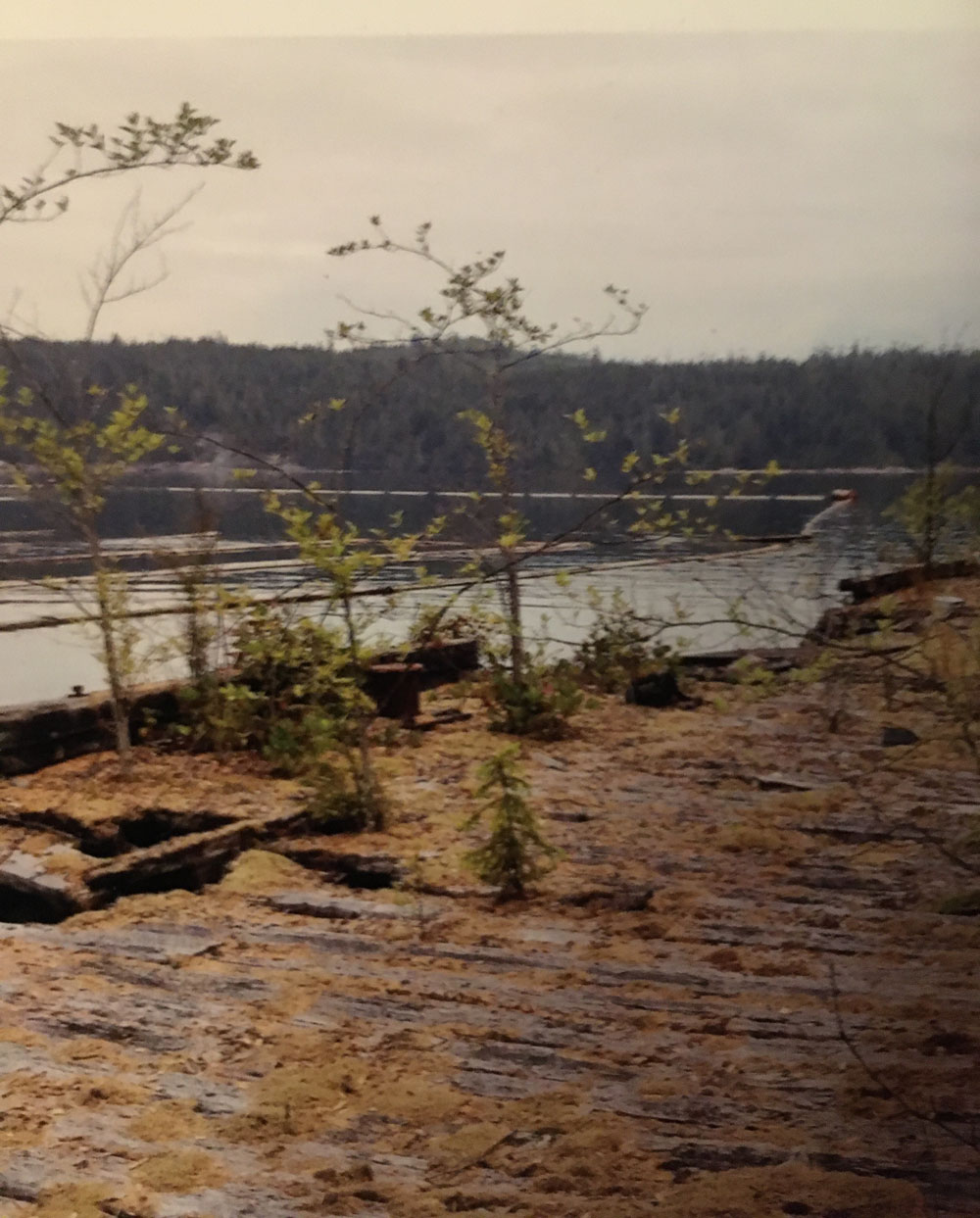
Beaver Cove Pulp Mill
Beaver Cove Hospital Mission Boat
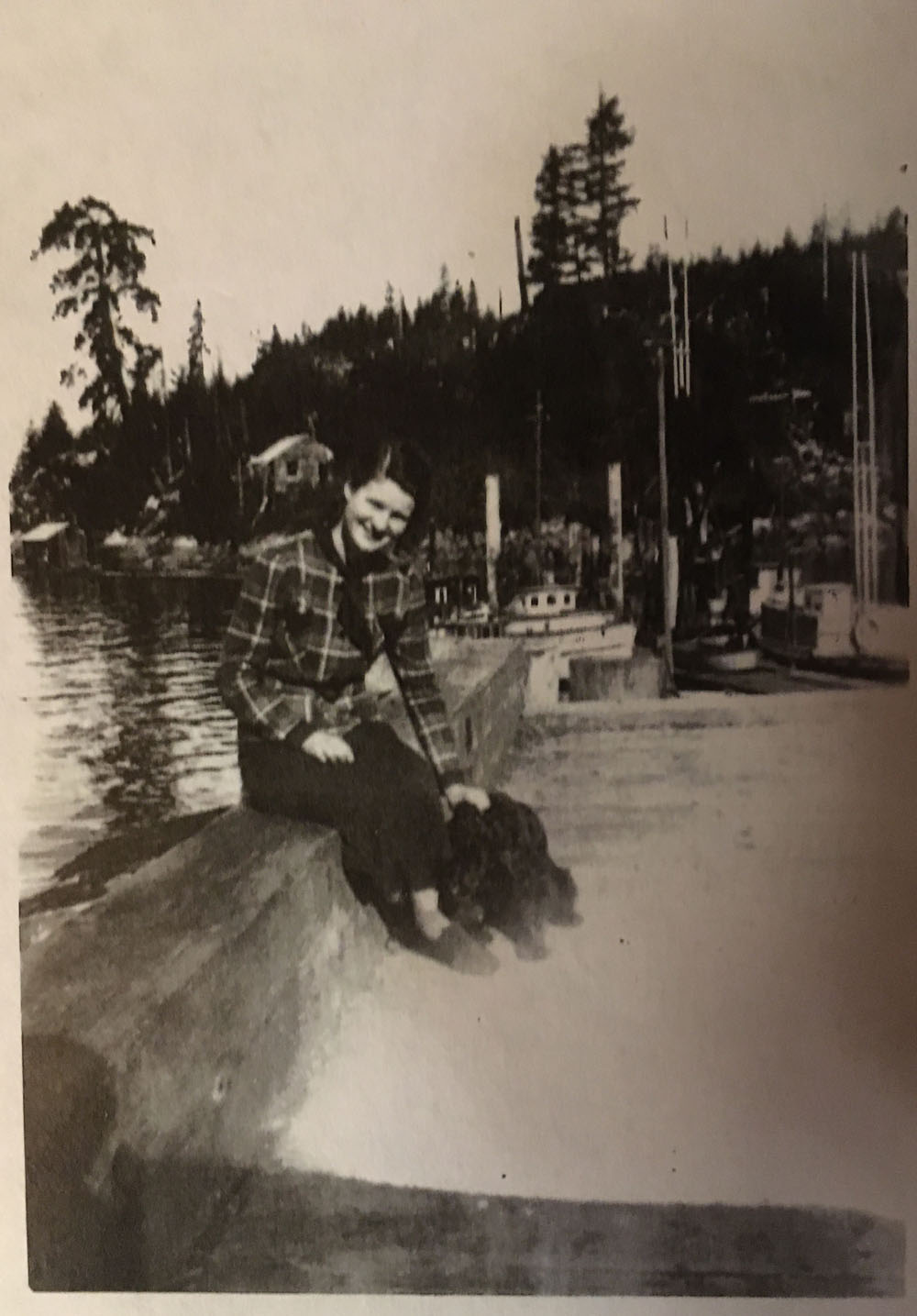
Beaver Cove wharf
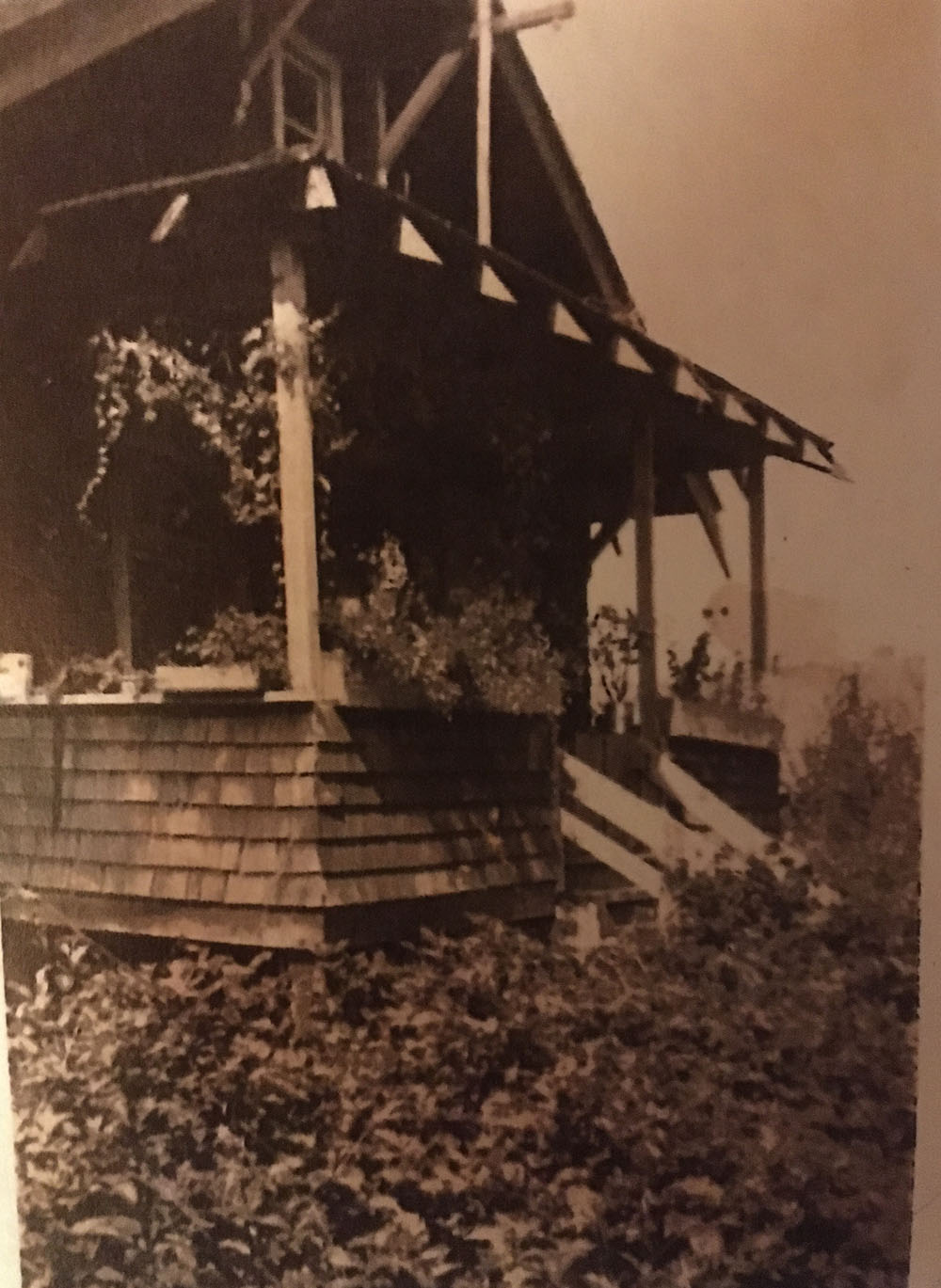
Their house in 1929
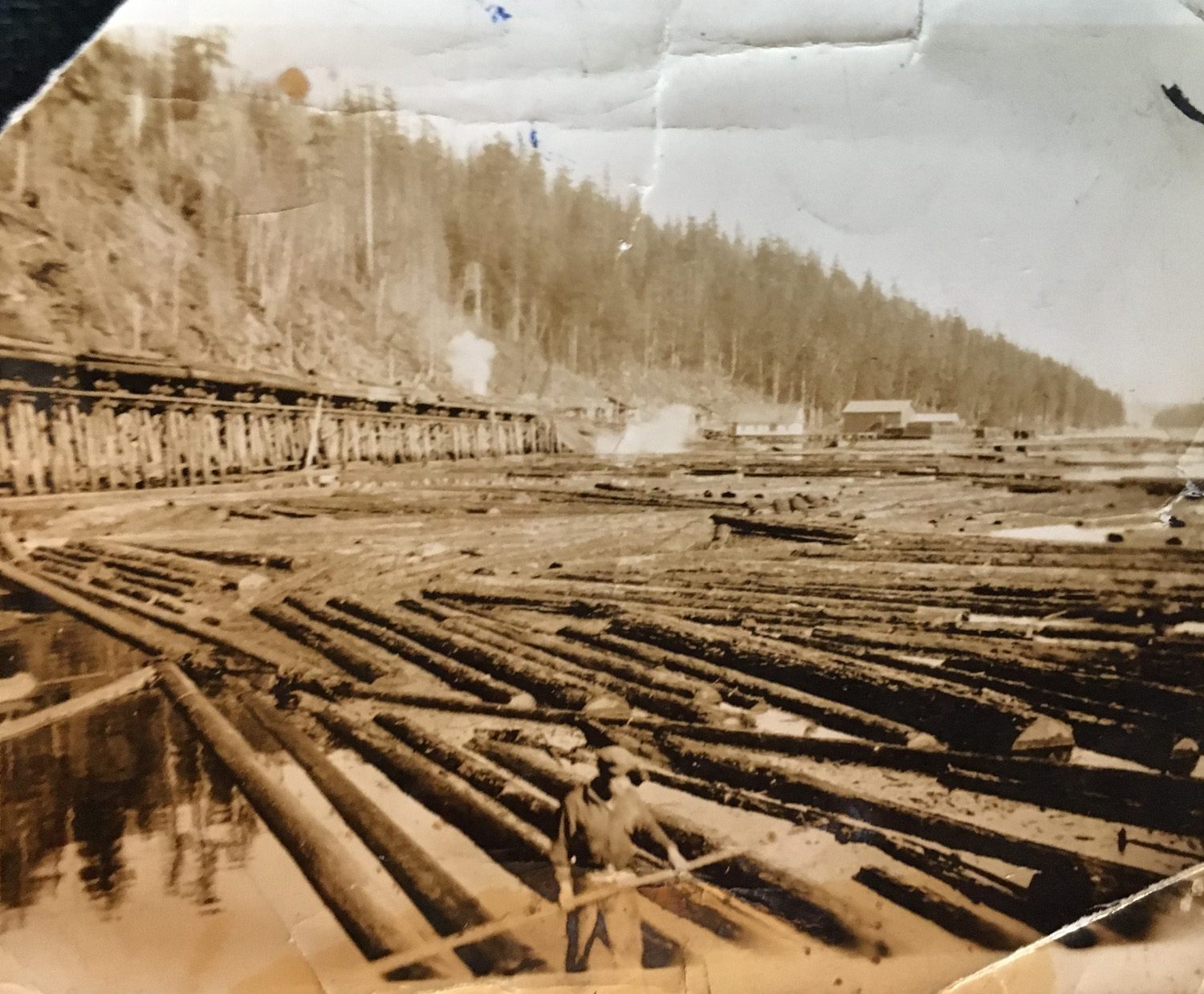
Englewood boom grounds
*** From Stuart DAVIDSON
(Kenneth’s great nephew, who also emigrated to Canada from
England 70 years after his uncle), 2016: My great uncle
is buried in Beaver Cove and I’m trying to find out about what
he might have been doing there. Note from Rod Sherrell, 2010:
Enjoyed your painting and history of Beaver Cove. I
own the boat house that is shown in which my 1939 Ed Monk Sr.
designed sedan cruiser resides. Don't know that I would
describe my neighbours homes as "grungy" but it is a step back
in time to the real north island. Note from Noreen Nash,
2010: I lived at Beaver Cove and the East Bay
you depict was a separate community from the actual Beaver Cove
site. The houses, bunkhouses, cookhouse and old buildings which
we lived and played in were where the dry land sort is or was.
Englewood was on the opposite side of the bay and East Bay was
on the trail heading to Telegraph Cove. Marmaduke Wastell bought
and developed Telegraph Cove in to the Broughton Lumber Company. Note from Bernard Schulmann,
2009: The logging railway is still in operation, I was
personally stunned to see it when I drove through the area last
week. Here are my observations, on my blog. Note from Eric of International Tire Consultants, 2009: Just wanted to compliment you on the painting of East Bay (cabins on stilts). You're right -- grungy at best. My uncle lives in one of them. I spend every easter there with him. Note from Jan Morrison relating to logging terminology she learned while living in Zeballos: The term choker-bunny is used for anyone (usually a man) who "sets beads" which is what you describe [puts the chain around a log that is then dragged toward the loader or truck or whatever]. I think bunny in this way means 'green' (as green used to mean! isn't language so interesting?). And that is because on a 'side' the choker-bunny is the lowest of the low. So there would be two or three choker-bunnies, a rigging-slinger, and the guys that handle the spar gear whose names allude me. So long ago. The rigging slinger tells the c-b which tree to choke. Then everyone clears out of the 'bite' (the swing of the trees) and he whistles up to the guy on the machine so he can start hauling. Usually I only tell these stories when I'm drunk so I can't quite get all the verve into it! Hopefully I will be able to in my novel. Oh and another term you might like is the 'crummy' used to
describe the vehicle that picked up the loggers in town and take
them out to the side. It was called a crummy because it was! It
ran on something other than gas and stunk - not to mention it
was full of dirty old loggers! Also we wore caulked boots
(pronounced corked) and pegged pants (pants that had protective
linings and no hems to catch on tree branches and send you into
your next life early.
|

 >
> >
> >
> >
> >
> >
>